Interview
Berlin
The In Between – In Conversation With Maxi Hachem
Issue 01: Community & Network
49.99€
As a filmmaker, Maxi Hachem reflects on heritage, patriarchy and identity, capturing documentary footage that, at times, feels surreal. The complex relationships and characters depicted in his work are the product of reflection, experience and empathy, as well as a genuine curiosity that can’t be quelled. An observer, Maxi has gathered an understanding of the complexity of familial relationships over the years, resulting in the ability to create art that doesn’t exploit, but expresses. It’s sensitive, raw, and doesn’t shy away from the inevitable discomfort. I spoke to him about the ethics of filming family conflicts, the vulnerability of sharing your work, and when the lines between community and network become blurred.
Mia Butter: Okay, so warming up into the topic of ‘Network’ here, how would you explain the difference between network and community from the perspective of your practice and personal experience?
Maxi Hachem: I think the general difference is that one is very transactional, that would be the network, whereas community is kind of all-encompassing. It can be something very personal and completely separate from work and my artistic practice, or any type of work, and revolves around whatever you want it to be. From political organisation to hobbies. But then again, community can also function in a way that is about work. I definitely have conflicting feelings about this topic as well. I think I do have a lot of really close relationships that come from friendships that are much older than my artistic practice, but they've now evolved into becoming collaborators or colleagues, and (they’re) still friends, of course, but there is a part of me that struggles with making time and coming together with these people and then not making work together or not thinking about work and just being together and not leveraging it in any way. I think it's really important to have these relationships and then have them be a part of your work and private life, as separate relationships.
MB: Well, a lot of your work is also quite personal, and a lot of the people you've worked with are also friends of yours and so separating business and pleasure is not always an option. You just have to find a way to navigate that.
MH: Yeah, and also I love to work. It's such a privilege to be able to work with your friends/family and (create works) about your friends. Lots of people dream of doing that. I think it’s so gratifying, but that's kind of what I'm trying to touch on: there are two sides to that, where your friendship can then fall secondary to work, and then it suffers.
I think it’s also good to have that ‘network’ side to it that is almost only transactional where of course, you know, I don't want to work with people that I don't like, but I think it's great to have a certain distance to at least some people in the realm of your practice just to be able to recuperate and not feel like that distance is somehow a reflection of your private relationship.
MB: For sure.
MH: Relationships like that are great to have as well: people that are still in your corner, and you're in theirs, but you guys aren't personally close.
MB: Okay, so speaking of combining community and network, you’re pretty private with your work in the production phase. You need people who can give you professional feedback, but who you know have your best interest at heart and aren’t competing with you. Who can you trust to see your work in such an early, vulnerable state?
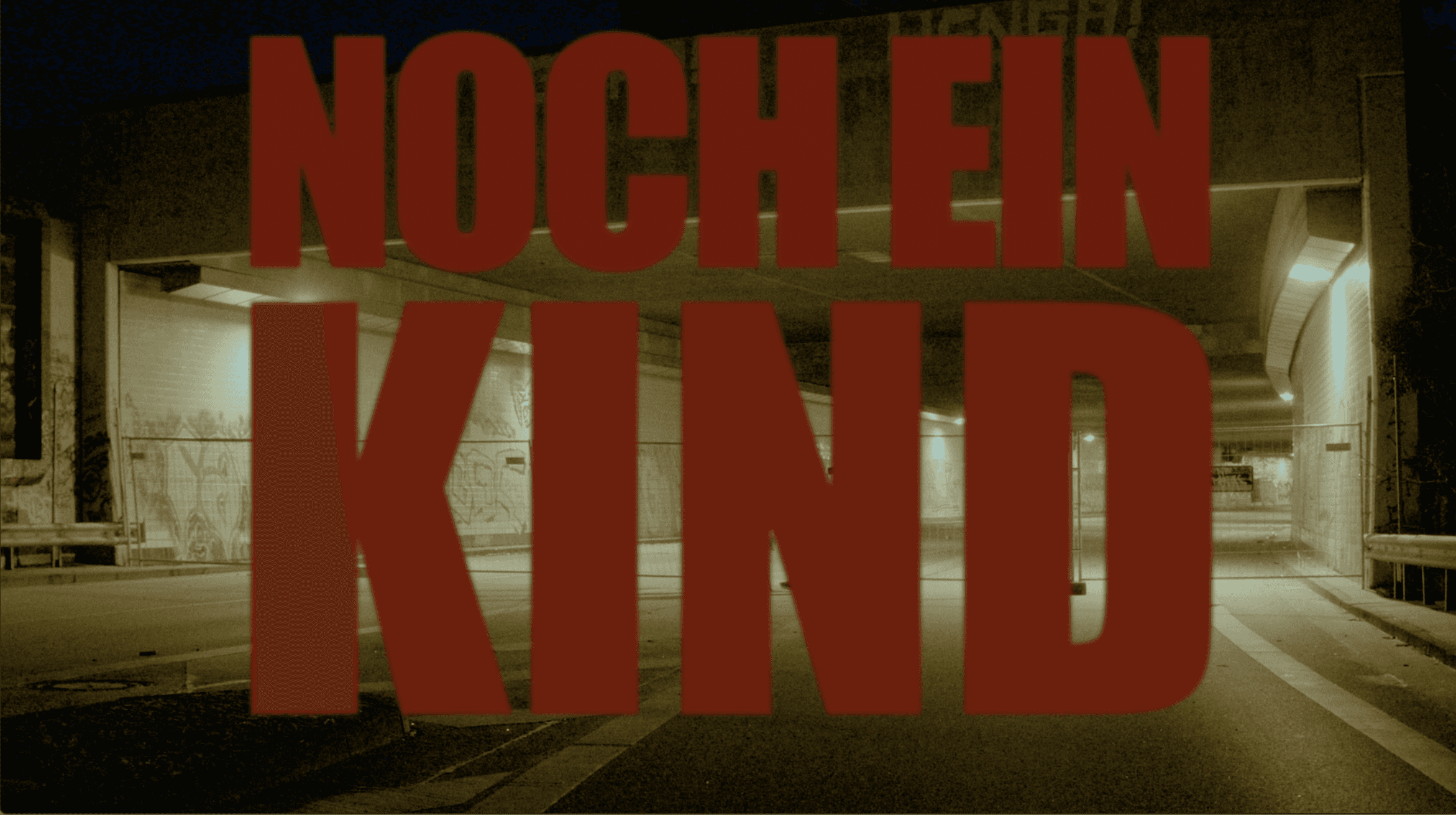
MH: With my music videos, I definitely show them to a couple of people, but at some point, I also know what I like and dislike, and I don't really want too much input. It bugs my decision-making. I feel like it dilutes whatever it is that I wanted to make. And that goes for ‘Noch Ein Kind’ too. I showed it to Abdul (artist Abdulhamid Kircher) while it was in a very rough state, and then I showed it to Zoe (Abdul's partner and close friend of Maxi), and then we watched it together, and I mean, it was important for me to show it to Abdul, for all types of reasons, to see if he's okay with it and if he likes it. I depict him in a very vulnerable way in the film. I felt really empowered by them liking it, and then I felt that I didn't really need to run it by anyone else, nor did I really want to.
MB: It's tough to find people whose input I really cherish. There's one friend of mine, I show him what I’m working on, and genuinely value his thoughts, because he has enough context to make that call. Do you think that's important to have that or not?
MH: I don't know, I don't think I necessarily have that. I do have a couple of people whose opinions can be devastating. That's different, I think. But I don't necessarily want it before finishing (the work). My sister Sarah, for example, is a great measure of how good the work tends to be. I think she has always had great insight without hurting my feelings too much.
But yeah, I am very particular, I don't like talking about my work too much before or during (the process), mostly because I don't really know where it's going to go. I work a lot from intuition, and I definitely know my intentions, or what I'm trying to discover, but I don't necessarily know how I'm going to go about it. At least, that's the case in my documentary work. I don't want to overcook my things.
MB: So you're currently based in Berlin, but spend a lot of time working in New York. You're between two places, and I'm interested in those circles. The ones you move within New York and in Berlin, and how they inform your work. What are those networks like?
MH: I think the difference is that Berlin is my home, I haven't lived outside of Berlin for 16 or 17 years, so I'm actively trying to work against my view of things becoming ossified. Not that they become stale, but it's become less dynamic, and your exposure is limited.
I guess the grooves in which you move through the city become etched through time, and you move the same way. That's where New York is so refreshing to me, where I've had the opportunity to meet really incredible people, but then still feel at home and at ease with them, and so there's that feeling of novelty but then also familiarity. I really cherish that, and I think that's where it's really exciting, because at the end of the day, I feel very much like a foreigner/ outsider in a way.
MB: So you're an outsider?
MH: Yeah, an outsider in the sense that I don't ever feel so at home, I feel like I'm always slightly on the fringe of something, looking in, and I like that, I think that's actually a privilege in many ways. I think that feeling comes from being a kid from a diaspora. Not quite fitting in anywhere. My sister calls it the “in-between” which I like a lot.
Read the full article in printed issue
